






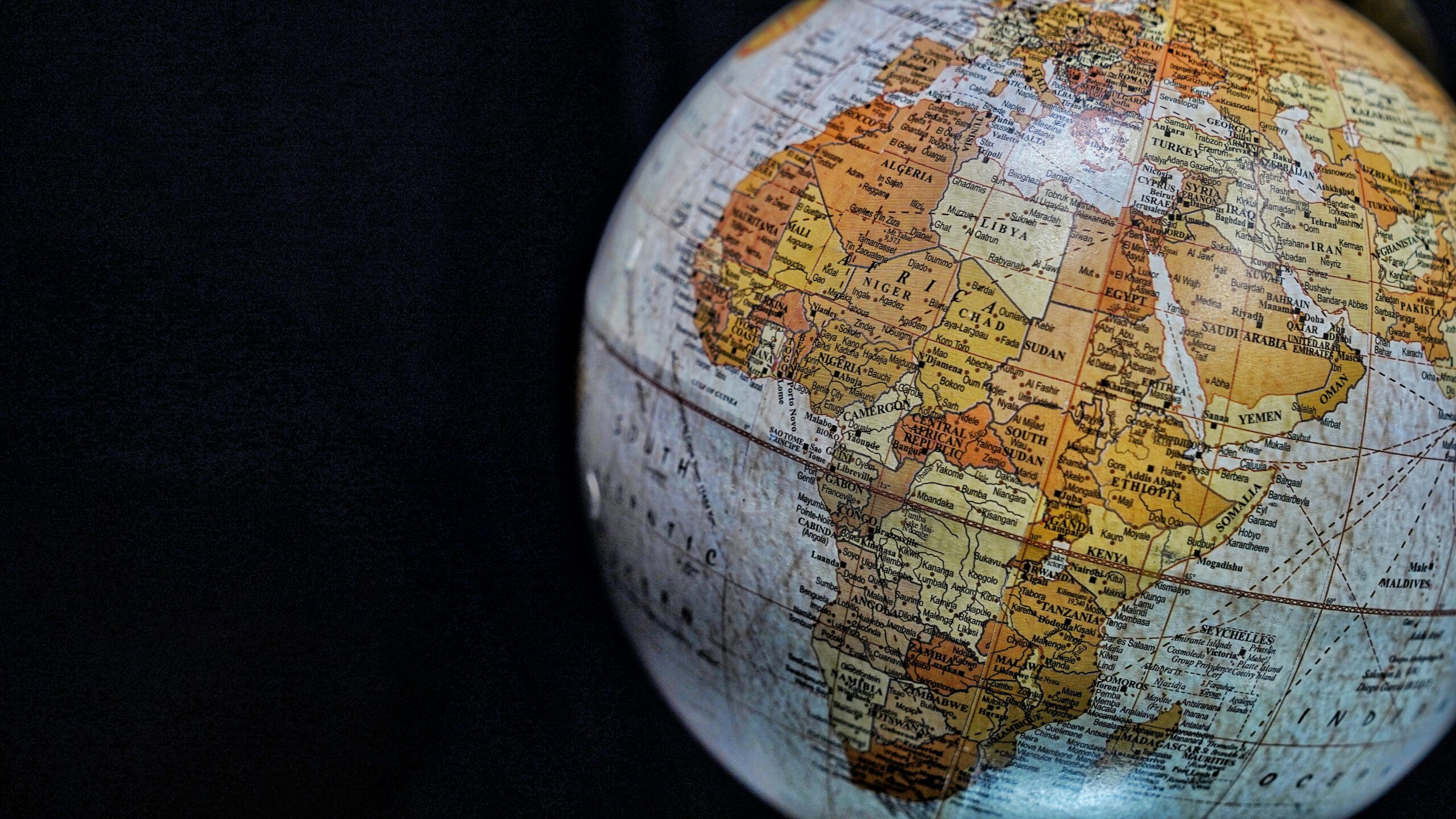
Before 1948, before Israel was carved into the map of the Middle East with the confidence of men drawing borders after lunch, the Zionist dream wandered across the cartographies of empire. Palestine was not always the only destination. That is the part polite history often hides under the carpet, preferably one woven by someone colonized.
Uganda. Madagascar. The Belgian Congo. Libya.
These were not random fantasies scribbled by confused bureaucrats after too much brandy. They were serious proposals, discussed in official rooms, by serious men, in serious suits, with the usual serious European habit of treating other people’s land as a vacant folder on the imperial desktop.
Europe had a problem. Europe had created antisemitism, nurtured it, baptized it, legislated it, militarized it, and then looked around for a place to export the consequences. Naturally, Africa appeared on the map. Not as Africa, of course. Europe rarely saw Africa as a continent of peoples, kingdoms, histories, languages, laws, ancestors, farmers, herders, poets, traders, healers, and stubborn grandmothers who knew exactly where the boundary stones were. No. Africa was seen as space. Empty space. Useful space. Problem-solving space. A place where Europe could dump its guilt, its refugees, its prisons, its experiments, its failed moral imagination — and later call it humanitarian policy. Very elegant. Very civilized. Very European.
The Uganda Plan That Was Not Uganda
Let us begin with the famous “Uganda Plan,” because even the name is wrong. Which is fitting. Colonialism has always had a talent for stealing land and mislabeling it afterward. In 1903, British colonial secretary Joseph Chamberlain proposed to Theodor Herzl a territory in East Africa as a possible refuge for Jews fleeing persecution in Europe. The plan became known as the “Uganda Scheme.” Except it was not Uganda. It referred to the Uasin Gishu plateau, in what is today Kenya, near the freshly built Uganda Railway. Britain had recently conquered the area and, with that charming imperial logic, decided that land already inhabited by African communities could now be offered around like an extra guest room.
The Sixth Zionist Congress accepted an exploratory mission. The Seventh rejected the proposal two years later. But the rejection does not erase the meaning of the proposal. Britain was not offering justice. Britain was offering someone else’s land. This is the magnificent moral arithmetic of empire: European Jews were persecuted by Europeans, so Africans could lose land to solve a European crime. A continent is brutalized in Europe, and Africa receives the invoice.
Madagascar: The Island-Prison Fantasy
Then came Madagascar. By 1940, Nazi Germany was not simply fantasizing about deportation. It was designing geography as punishment. After France fell, Madagascar — then a French colony under Vichy control — appeared in Nazi plans as a possible destination for Europe’s Jews. An island-prison. An open-air ghetto. A colonial cage. The plan collapsed because of naval realities and British resistance. Germany could not move millions of Jews across seas it did not control. But the moral structure of the idea was already clear. Take a colonized island. Remove its humanity. Turn it into a dumping ground for people Europe had already decided were surplus. Madagascar was not imagined as a homeland. It was imagined as a graveyard with palm trees.
And when that plan failed, the machinery moved from deportation to extermination. The logic did not change. It intensified. First isolate. Then expel. Then dehumanize. Then kill. The colony had already taught Europe how to think like that.
The Belgian Congo: The Ledger of Human Beings
The Belgian Congo also entered the discussion during the inter-war years. Belgian officials, investors, and colonial minds briefly considered the idea of settling Jewish refugees there. Some saw possible economic benefit. Others worried about instability. The debate faded. No organized mass migration followed. But the fact that the Congo was even considered tells us something important. The Congo, already mutilated by Leopold’s rubber terror and Belgian colonial extraction, was still being discussed as if it were a storage facility for European demographic anxiety. Not a country. Not a civilization. Not a wounded land full of people already living through the consequences of Europe’s greed. A ledger. A plantation with paperwork. A place where Brussels could move numbers around. One can almost hear the colonial accountant: too many Jews in Europe, too much land in Africa, perhaps we can balance the equation. Humanity reduced to logistics. Again.
Libya: The Mirage
Even Libya appeared in some early Zionist discussions. Ottoman Libya, then Italian Libya, entered the imagination as another possible site. The plan never matured. Water scarcity, politics, instability, and competing imperial ambitions made it impractical. But impracticality is not innocence. The impulse matters. Africa remained the “elsewhere” of Europe. The magical elsewhere. The convenient elsewhere. The place where European crises could be relocated without disturbing the furniture in Paris, London, Berlin, Vienna, or Brussels. When Europe dreams badly, Africa is often where the nightmare is sent to sleep.
The Colonial Imagination and the Refugee Question
Let us be clear: Jewish suffering in Europe was real. It was not invented. It was not exaggerated. Pogroms, exclusion, racial laws, ghettos, dispossession, humiliation, and eventually industrial genocide formed one of the greatest crimes in human history. But acknowledging that truth does not require us to suspend another truth: Europe repeatedly tried to solve European antisemitism through colonial displacement. Instead of dismantling antisemitism at home, it searched for land abroad. Instead of confronting its own racial sickness, it turned to the imperial map and asked: where can we put them? And because the imperial map was already soaked in theft, the question became easy. Africa. Always Africa. The continent that Europe had already trained itself not to see.
The Promise Built on Erasure
This is why the story matters. Because before Palestine became the final site of this settler project, there were other imagined “promised lands” — and they were almost always promised by people who did not own them to people who did not live there. That is the central obscenity. A promise made over the heads of the inhabitants. A dream written on stolen paper. A humanitarian gesture wrapped around colonial violence. And then, when the indigenous people object, they are described as irrational, backward, violent, difficult, antisemitic, tribal, uncivilized — the usual vocabulary empire keeps in its emergency drawer. Because colonialism never says: “We stole.” It says: “We developed.” It never says: “We displaced.” It says: “We settled.” It never says: “We erased.” It says: “We brought civilization.” And when the natives resist, empire becomes deeply disappointed in their manners.
Europe’s Old Trick
The forgotten African chapters of Zionist geography reveal a larger pattern. Colonialism and genocide are not identical, but they share an administrative imagination. They classify. They map. They count. They move populations. They decide who belongs and who does not. They turn human beings into categories, categories into files, files into policies, and policies into graves. The Holocaust did not fall from the sky like a meteor. It emerged from Europe’s long apprenticeship in racial hierarchy, conquest, camps, forced labor, and mass death. The colonies were laboratories of cruelty. Europe practiced far away before it horrified itself at home. This is what Aimé Césaire understood with terrifying clarity: Europe was shocked by fascism not because fascism was alien to Europe, but because fascism applied colonial methods to Europeans. The scandal was not the method. The scandal was the target.
Remember the Map Before the Map
Remember this, then: The “Uganda Plan” was not Uganda. It was Kenya. Madagascar was imagined as a prison. The Congo was treated as a demographic experiment. Libya was another mirage in the imperial desert. And Palestine was not an isolated accident. It was the place where the colonial imagination finally landed and stayed. This does not erase Jewish suffering. It refuses to let that suffering become a license to erase others. Because pain does not grant title deeds. Trauma does not make land empty. A people fleeing persecution do not acquire the right to become the machinery of another people’s dispossession. No land can be promised by strangers. No homeland can be built honestly on the disappearance of those already at home. And no map, however sacred its language, becomes moral simply because empire held the pen.

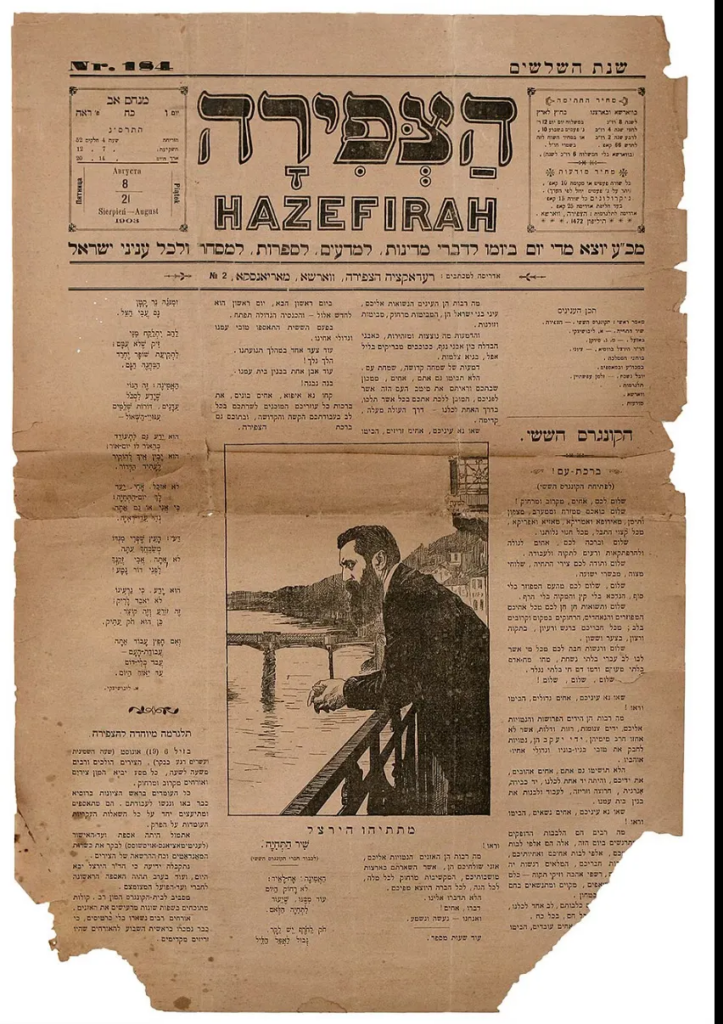
A newspaper with a greeting on the occasion of the opening of the sixth Zionist Congress and an illustration of Theodor Herzl on the balcony of the “Hotel Les Trois Rois“ in Basel, 1903. Source:wikipedia

